Das Tor zur (Unter)welt

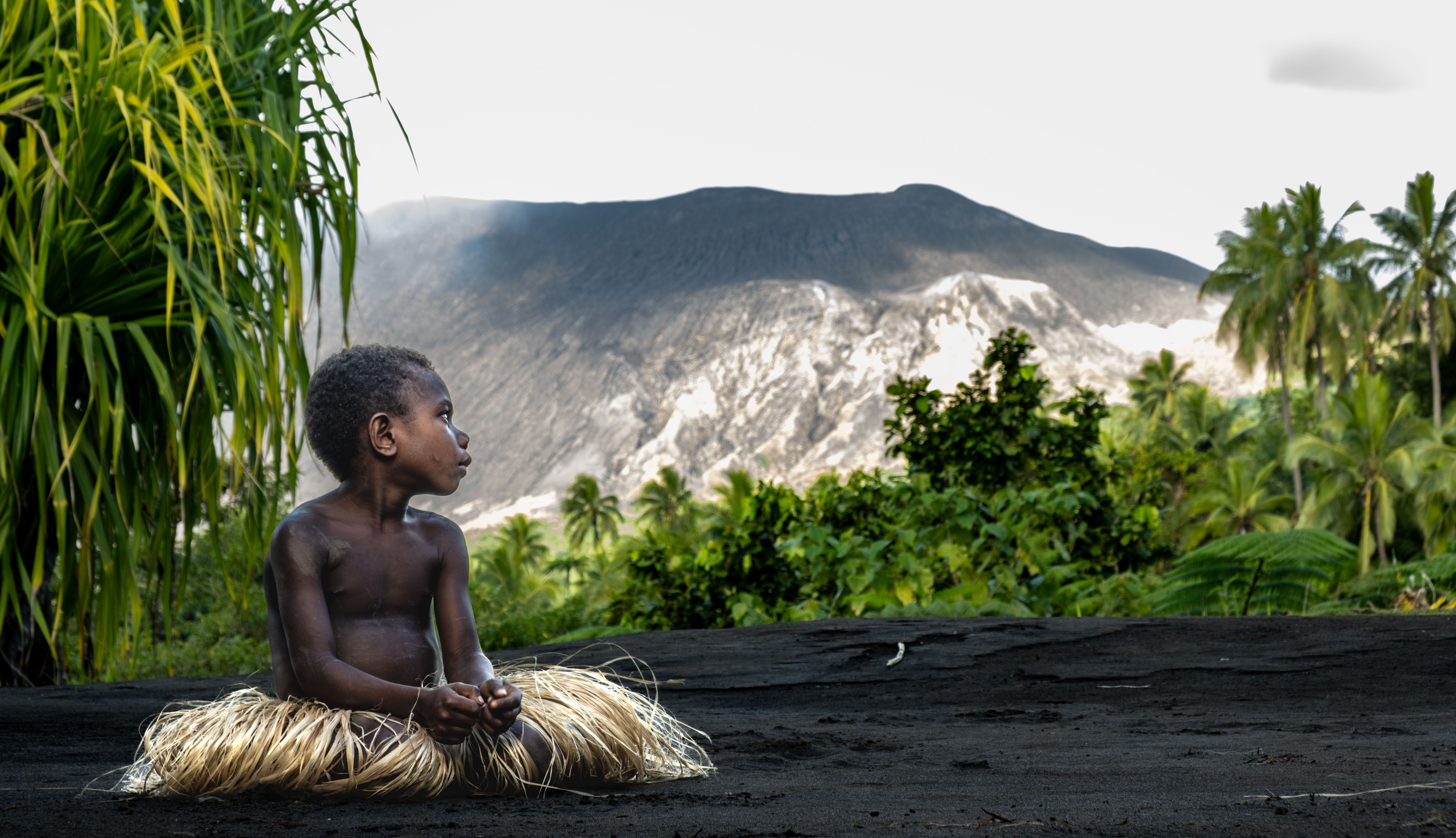
Ein Blick in den glühenden Schlot des Mount Yasur auf der Insel Tanna: Der Stratovulkan zählt zu den am leichtesten zugänglichen und zugleich aktivsten Vulkanen der Erde. Regelmäßige strombolianische Explosionen sowie Asche- und Gaswolken aus dem rund 400 Meter breiten Gipfelkrater prägen sowohl die Landschaft als auch das Leben auf Tanna. Der Mount Yasur ist ein rastloser, brodelnder Vulkan – ein Feuerberg, der niemals zur Ruhe kommt.
Bedrohung der Lebensgrundlagen durch vulkanische Gase
Zwar fördern Vulkaneruptionen und Ausstöße mineralienreiche Aschen, die einen besonders guten Nährboden für Pflanzen bilden und in die umliegende Landschaft verteilt werden, jedoch birgt jede größere Eruption ein Risiko, das zu Ernteausfällen oder sogar zur Zerstörung ganzer Landstriche führen kann. Abgesehen von den typischen Gefahren, wie zum Beispiel pyroklastischen Strömen und Lavaströmen, die von einem aktiven und explosiven Vulkan ausgehen, können bereits vulkanische Gase verhängnisvolle Auswirkungen auf die Umwelt haben.
Die Zusammensetzung vulkanischer Gase variiert je nach Vulkan. Das häufigste vulkanische Gas ist Wasserdampf (H₂O). Daneben finden sich ebenfalls Kohlendioxid (CO₂), Schwefeldioxid (SO₂), Kohlenmonoxid (CO), Salzsäure (HCl), Wasserstoff (H₂) und Schwefelwasserstoff (H₂S).

Vor allem Schwefelverbindungen können gefährlich werden, wenn sie in höhere Schichten der Atmosphäre aufsteigen. Einerseits kann eine hohe Menge dieser Gase dazu führen, dass mehr Sonnenstrahlung reflektiert wird und diese die Erde nicht erreicht. Dadurch kühlt sich die Temperatur merklich ab, was bei einer über mehrere Monate oder sogar Jahre andauernden Wirkung zu Dürren, Hungersnöten und veränderten Ökosystemen führen kann führen kann – wie es bereits in der Erdgeschichte vorgekommen ist.

Andererseits können sich diese Gase, wenn sie in die Atmosphäre gelangen, mit Wasser-Aerosolen verbinden, wodurch sich Schwefelsäure bildet. Dieses Gemisch geht anschließend als saurer Regen auf die Erde nieder, kann Pflanzen schädigen, Ernten zerstören, Trinkwasserquellen versauern und Nährstoffe in Böden zersetzen.
Davor kann sich niemand schützen, und so leben die Menschen am Mount Yasur in ständiger Hoffnung und im Zwiegespräch mit dem Vulkan, dass er ihre Pflanzen und Lebensgrundlage am Leben lässt.
The Gateway to the (Under)world
A view into the glowing crater of Mount Yasur on the island of Tanna: this stratovolcano is considered one of the most easily accessible and at the same time one of the most active volcanoes on Earth. Regular Strombolian eruptions, along with ash and gas clouds rising from the approximately 400-meter-wide summit crater, shape both the landscape and everyday life on Tanna. Mount Yasur is a restless, boiling volcano — a mountain of fire that never comes to rest.
Threat to livelihoods from volcanic gases
Although volcanic eruptions and emissions produce mineral-rich ash that is distributed across the surrounding landscape and provides a particularly fertile soil for plants, each major eruption also carries a risk that can lead to crop failures or even the destruction of entire regions. In addition to the typical hazards associated with an active and explosive volcano, such as pyroclastic flows and lava flows that originate from it, volcanic gases can already have severe impacts on the environment.
The composition of volcanic gases varies from volcano to volcano. The most common volcanic gas is water vapor (H₂O). In addition, carbon dioxide (CO₂), sulfur dioxide (SO₂), carbon monoxide (CO), hydrogen chloride (HCl), hydrogen (H₂), and hydrogen sulfide (H₂S) are also present.
Sulfur compounds in particular can become dangerous when they rise into the upper layers of the atmosphere. On the one hand, a high concentration of these gases can cause more incoming solar radiation to be reflected, preventing it from reaching the Earth’s surface. As a result, temperatures drop significantly, which—if it persists for several months or even years—can lead to droughts, famines, and altered ecosystems, as has already occurred in Earth’s history.
On the other hand, once in the atmosphere, these gases can react with water aerosols, forming sulfuric acid. This mixture then falls back to Earth as acid rain, which can damage plants, destroy crops, acidify drinking water sources, and deplete nutrients in soils.
Against this, no one can truly protect themselves, and thus people living near Mount Yasur live in constant hope and in dialogue with the volcano that it will keep their plants alive.